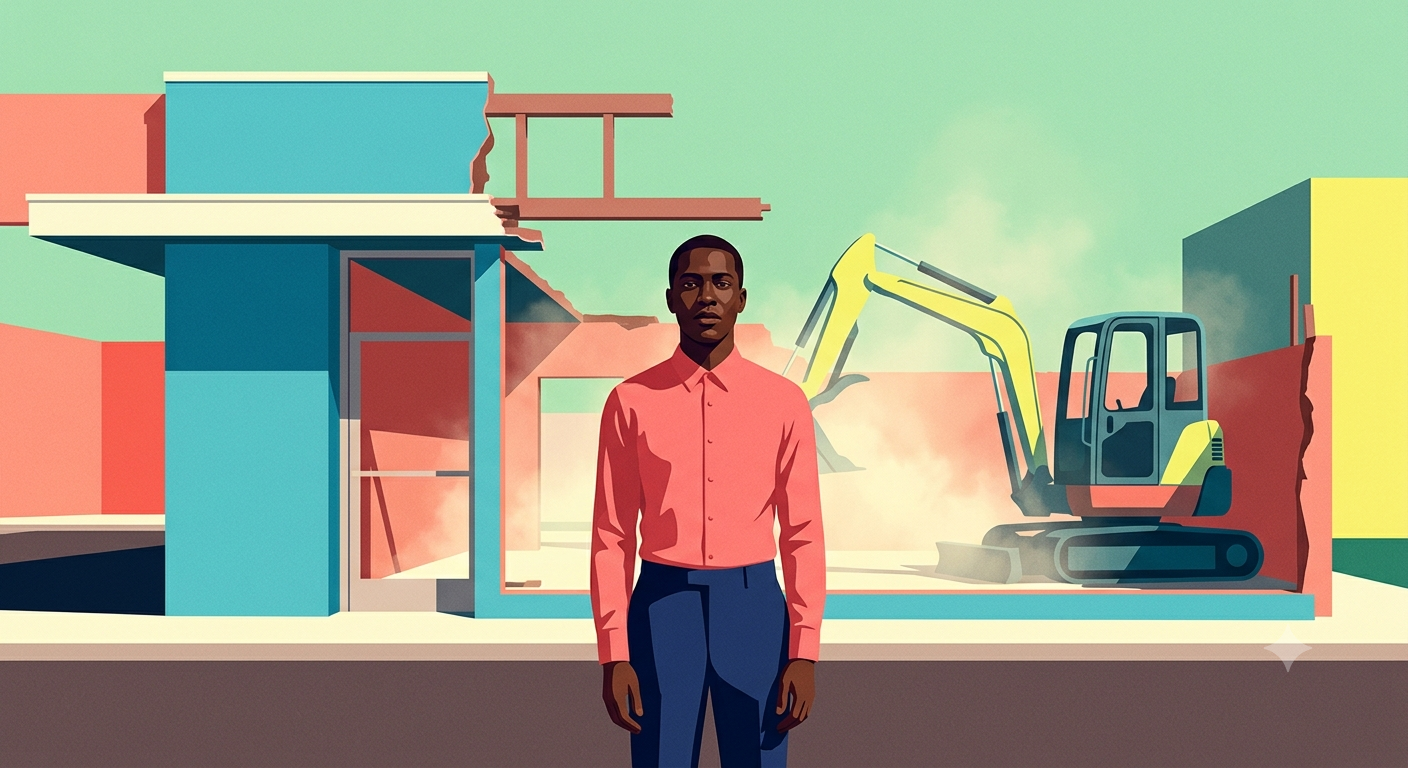
It is often strange when we learn of something obviously good, some change we have been praying and hoping for, some progress we've long desired, only to see it rejected and attacked by fellow members of society.
The default reaction is to call these people idiots, fools, or slaves. But what if this resistance is more complicated than that?
In my early years, the state I grew up in had a governor who embarked on massive infrastructural development. Roads were built. Streets were lit. The face of the city began to change. But that change came with disruption. Some people lost access to business locations because those places stood in the way of the new development.
The governor ran an ad comparing the pain of change to getting slapped on the hand by a friend trying to kill a mosquito sitting on you. The slap hurts, but the mosquito is dead.
It is a memorable analogy. But it assumes the person being slapped agrees about the mosquito.
Because the real problem with change is not the pain. It is that everything you have built, your income, your routine, your business, your survival, sits on a system. And sometimes the very system producing the failures we complain about is the same one keeping us alive. So we call for change in the abstract, until the solution requires dismantling something we depend on. Then change suddenly feels dangerous.
Psychologists call part of this status quo bias. People often prefer a flawed reality they understand over an uncertain improvement they do not. But it goes beyond mere psychology. People have also watched "development" used as justification for exploitation before. They have seen who bears the cost: who loses income, who loses land, who loses status, who becomes irrelevant. Progress creates winners and losers, and the people being asked to pay are not always the ones who will collect.
We have seen this throughout history. The printing press threatened scribes. Cars disrupted horse-based industries. The internet dismantled entire sectors. Every major transformation produces resistance, not always because the change is wrong, but because it ends a way of life that real people were living inside.
I remember a woman in Benin who had campaigned hard to put a certain man in office. He won, began transforming the area, and her shop had to be demolished because it extended into the road. The reformer she helped elect became the force that displaced her. The line between those two roles is much thinner than we like to think.
So the next time you see someone resisting what looks like obvious progress, resist the easier question. Do not ask why they cannot see what is good. Ask what they are afraid of losing. Ask what cost they are being asked to carry alone.
Because if progress ever comes for something you built with your own hands, a business, a livelihood, a system that however flawed kept you alive, you may find that the people you once called obstacles were simply human beings standing where you are standing now.
Resisting change is easier to condemn than it is to avoid.

Discussion
0 comments